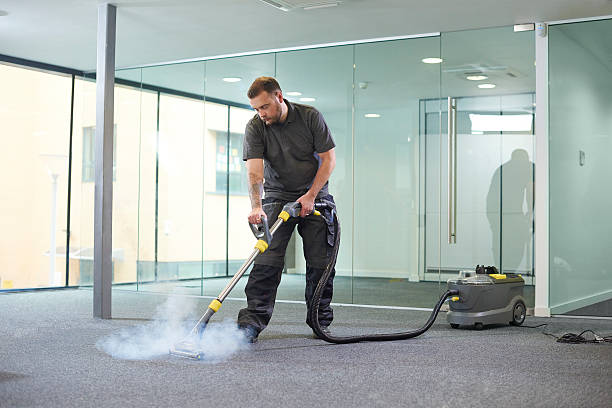
Walk into most Sydney offices and you can usually guess how long the carpet has been down without asking. Not because of the style or colour, but because of the wear patterns: the slightly darker path from the entrance to the kitchen, the faint outline where a desk used to sit, the general dullness that no amount of vacuuming seems to fix. Carpets take an enormous amount of abuse in commercial settings, and most businesses only think about cleaning them once the damage is already visible.
Office carpets deal with a level of foot traffic that residential carpets simply never see. Dozens or hundreds of people walking across the same path every single day, tracking in dirt, dust, and whatever they’ve stepped in on the way from the car park. Add spilled coffee, dropped food, and the occasional office mishap, and it’s easy to see why carpets in busy commercial spaces age faster than most people expect. Carpet Cleaning Sydney
Vacuuming Isn’t Enough
Regular vacuuming does an important job, removing surface dust and loose debris, but it barely scratches the surface of what actually settles into carpet fibres over time. Dirt, oils from foot traffic, and airborne particulates work their way down into the pile, where a standard vacuum simply can’t reach. Over months, this buildup compacts the fibres, dulls the colour, and creates the kind of general griminess that makes a carpet look tired even right after it’s been vacuumed.
This is where deep cleaning methods, like hot water extraction or encapsulation cleaning, come in. These techniques lift embedded dirt out from deep within the carpet fibres rather than just brushing the surface, restoring both the appearance and the feel of the carpet in a way that daily vacuuming never can.
The Health Angle Most People Miss
Carpets act as a filter for the air in a building, trapping dust, allergens, and even bacteria within their fibres. That’s useful in the sense that it keeps particles out of the air people are breathing, but only if the carpet is cleaned regularly enough to actually remove what it’s trapped. Left too long, a carpet becomes a reservoir of allergens that gets stirred back into the air every time someone walks across it.
For offices with staff who suffer from allergies or asthma, this isn’t a minor detail. Regular deep cleaning genuinely improves indoor air quality, which is one of the less obvious but more important reasons businesses schedule professional carpet care rather than relying on vacuuming alone.
Extending the Life of an Expensive Asset
Commercial carpet isn’t cheap, and replacing it across an entire office floor is a significant expense most businesses would rather avoid for as long as possible. Regular professional cleaning is one of the most cost-effective ways to extend a carpet’s usable life, since it prevents the kind of deep, ground-in dirt that eventually breaks down fibres and causes permanent discolouration.
Businesses that invest in a consistent cleaning schedule for Carpet Cleaning Sydney typically get several extra years out of their carpet compared to those who wait until it looks visibly bad before calling anyone in. It’s a straightforward case of a small ongoing cost preventing a much larger one down the track.
Stains, Spills, and Everyday Accidents
Every office has its stories: the coffee spill that never quite came out, the mystery stain near the printer, the carpet tile that’s a slightly different shade after someone tried to clean it themselves with the wrong product. Professional cleaners bring the right chemicals and techniques for different stain types, which matters more than people realise, since the wrong approach can set a stain permanently or damage the carpet fibres altogether.
Quick response to spills also makes a big difference. The longer a stain sits, the harder it becomes to remove, which is why many businesses arrange for their cleaning provider to be available for reactive callouts between scheduled deep cleans.
How Often Should Commercial Carpets Be Cleaned?
This depends on foot traffic and the nature of the business. A busy reception area or a call centre floor with constant movement might need deep cleaning every few months, while a quieter back office might only need attention twice a year. Retail spaces and hospitality venues, where spills are a daily occurrence, often need the most frequent attention of all.
A good provider will assess the space and traffic patterns rather than applying a blanket schedule to every client, which helps businesses avoid paying for more frequent cleaning than they actually need.
Final Thoughts
Carpet is one of those things people only notice when it’s gone wrong, but by then, the wear is usually already baked in. A regular professional cleaning schedule keeps commercial carpets looking sharp, supports better indoor air quality, and protects what is often a significant investment in the look and feel of an office space.